


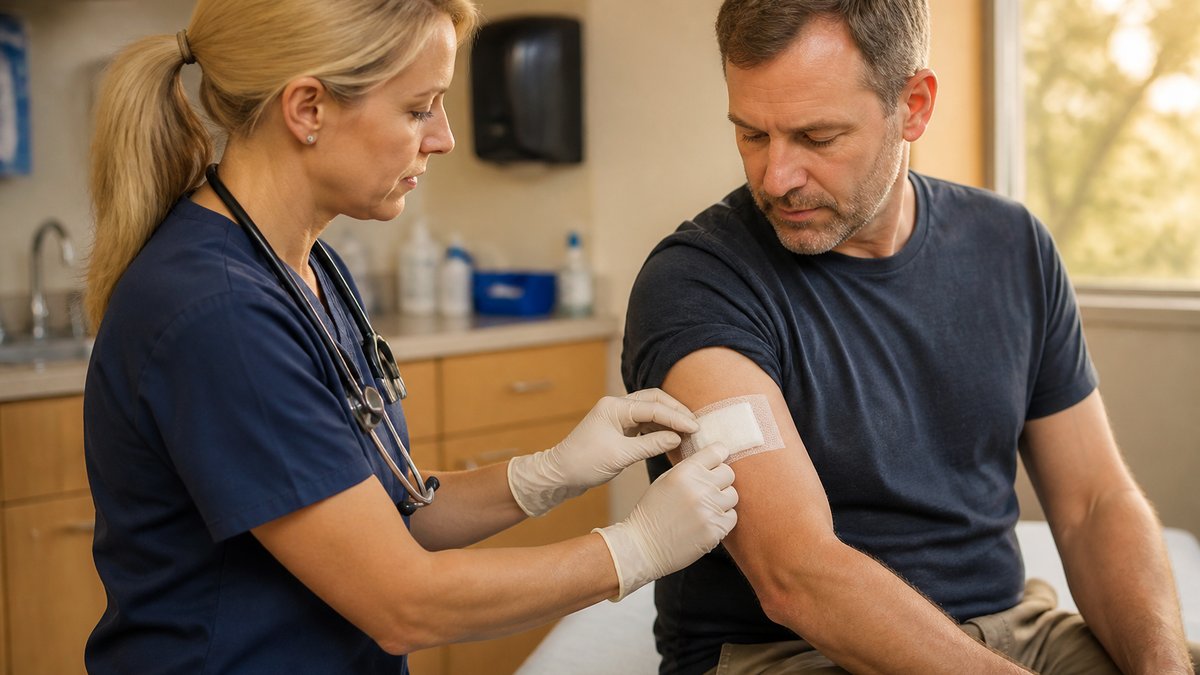

Whether you are recovering from surgery, managing a burn, or caring for a laceration, your wound care will determine how you heal and scar. Creating a routine begins with understanding your wound type and following the specific instructions your physician provides. From there, you can establish daily habits for cleaning and dressing the wound and protect the area as it heals. Learn how to create a wound care routine.
Daily Wound Care
Begin each care session by washing your hands thoroughly with soap and warm water for several seconds. Clean hands reduce the chance of introducing bacteria into the wound. If your physician recommends it, wear disposable gloves.
Gently remove the existing dressing; if it adheres to the wound, moisten it with sterile saline or clean water to loosen it without pulling. Clean the wound with mild soap and water or a saline solution as directed. Avoid hydrogen peroxide and rubbing alcohol unless your care provider specifically recommends them, as these products can damage healthy tissue and slow healing.
Apply any prescribed ointment, then cover the wound with a fresh, sterile dressing. Many wounds heal best in a moist environment, so your provider may recommend a particular dressing to maintain appropriate moisture levels. Change the dressing as often as instructed, or sooner if it becomes wet, soiled, or saturated with drainage.
Watching for Infection
Infection can complicate wound healing, and early detection allows for prompt treatment. Inspect the wound and surrounding skin each time you change the dressing. Contact your physician if you notice any of the following:
- Redness or warmth that spreads beyond the wound edges
- Swelling that worsens rather than improves after the first few days
- Pain that intensifies over time
- Thick, cloudy, yellow, or green drainage
- An unusual or foul odor
- A high, unmanageable fever
Keeping a brief written record of the wound’s appearance, including its size, color, and drainage, can help you and your care team identify subtle changes. Some patients also find it useful to take a photograph at each dressing change for comparison.
When to Seek Emergency Care
Certain situations require immediate medical attention. Call 911 or go to the nearest emergency department if a wound bleeds heavily and does not stop after several minutes of firm, direct pressure. Seek emergency care for deep wounds that expose fat, muscle, or bone, as well as wounds with edges that gape open and cannot be brought together.
Red streaks extending from the wound, chills, confusion, or a rapid heart rate may indicate that an infection has spread into the bloodstream. Numbness and a loss of movement near the wound may signal nerve or tendon damage. These symptoms require emergency wound care.
Preventing Wound Reoccurrence
Patients prone to pressure injuries should change positions frequently and use supportive cushions or mattresses. Those with diabetes or circulation concerns should wear well-fitting footwear and inspect their feet daily. Applying sunscreen to healing skin and scars can also help reduce discoloration and protect fragile tissue.
Schedule Wound Care Consults
A structured home routine is most effective when paired with professional oversight. Regular appointments allow your care team to assess healing progress, adjust your treatment plan, and address concerns before they become serious. If a wound shows no improvement within two weeks or has not healed within four weeks, it may be considered chronic and require specialized care.
Plastic surgeons and wound care specialists offer advanced treatments that can promote healing and minimize scarring, helping to restore both the appearance and function of the affected area. If you are managing a slow-healing wound or are concerned about scarring, schedule a consultation with a qualified specialist to discuss your options and receive personalized guidance.