


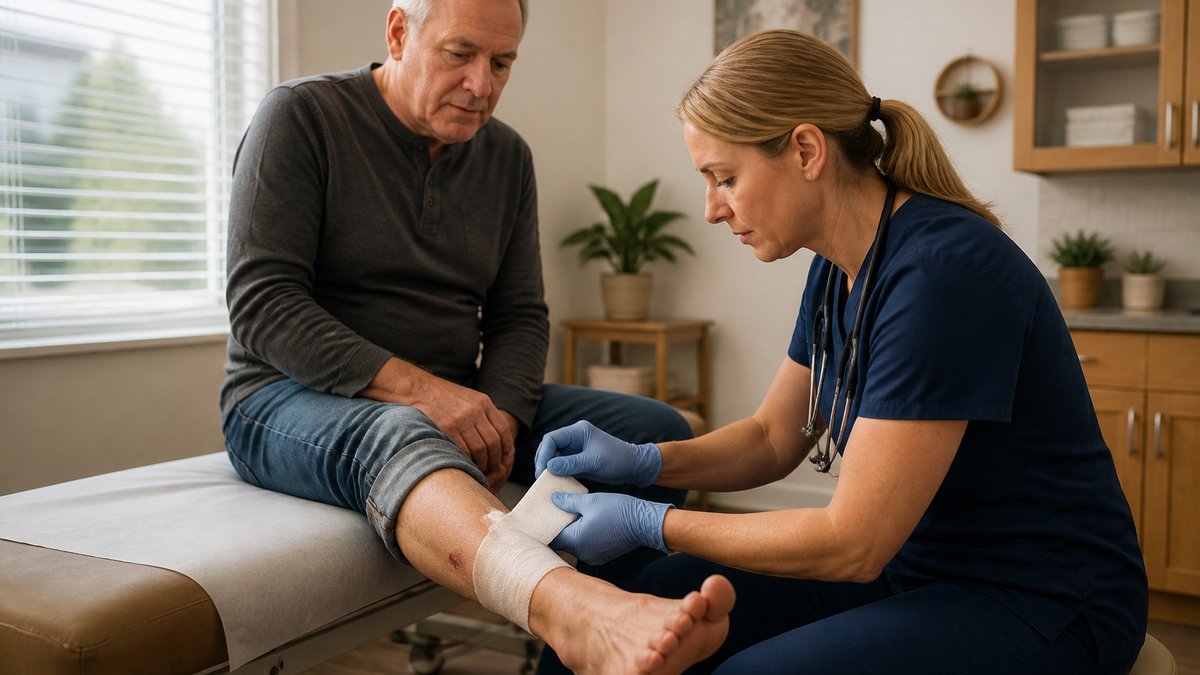

Ankle wounds face constant pressure from walking, shoes, and daily movement, and surgery requires aftercare. The skin over the ankle bone is thin, and it has little padding underneath. Since the joint flexes with every step, cuts and scrapes in this area often heal slowly. Here is more information on basic home care steps after a minor ankle injury:
Change Dressing Regularly
Many minor ankle wounds need a fresh dressing once a day, or whenever the bandage gets wet or dirty. Socks and shoes rub against the ankle, so check the dressing for shifting throughout the day. A loose bandage exposes the ankle wound to dirt. Use these steps during each change:
- Wash your hands and remove the old dressing slowly.
- Soak a stuck bandage with warm water to loosen it.
- Look for new redness, drainage, or odor.
- Apply a thin layer of petroleum jelly or antibiotic ointment.
- Cover the wound with a nonstick pad and secure it with medical tape.
Keep the Area Clean
Wash your hands with soap and water first, and dry them with a clean towel. Once your hands are clean, rinse the wound under cool running water for several minutes. This step removes dirt, debris, and loose bacteria.
If debris remains after rinsing, lift it out with tweezers cleaned in rubbing alcohol. Wash the skin around the wound with mild soap. Keep soap out of the open wound, and pat the area dry with clean gauze. Embedded gravel or glass needs removal by a medical provider.
Skip hydrogen peroxide and iodine for routine cleaning. While these products are designed to kill germs, they may also damage healthy cells and slow healing. Plain water works well for most minor wounds, and mild soap handles the surrounding skin. Save stronger products for use under a provider’s direction.
Manage Swelling
Swelling slows blood flow to the wound, and poor blood flow delays healing. Elevate your ankle above heart level several times a day. When you rest on a couch or bed, prop your foot on two or three pillows.
A cold pack also reduces swelling around the joint. Wrap the pack in a thin towel, and apply it for 15 to 20 minutes. Keep the ice away from the dressing so the bandage stays dry. Limit long walks and extended standing for the first few days.
Alert Doctor of Infection
Even when you follow every step, an ankle wound may still develop an infection. Check the wound closely during every dressing change. Mild pinkness at the edges is normal, but spreading redness signals a problem. Contact a medical provider if you notice any of these signs:
- Redness or red streaks spreading from the wound
- Warmth, swelling, or pain that worsens after two days
- Thick yellow or green drainage
- Odor from the wound
- Fever or chills
Schedule Ankle Wound Care
If your wound shows no improvement after a week, schedule an evaluation. Urgent care centers accept walk-in patients, and many stay open during evenings and weekends. A provider examines the wound and checks for infection. Seek care the same day for deep cuts, gaping edges, or bleeding that does not stop.